
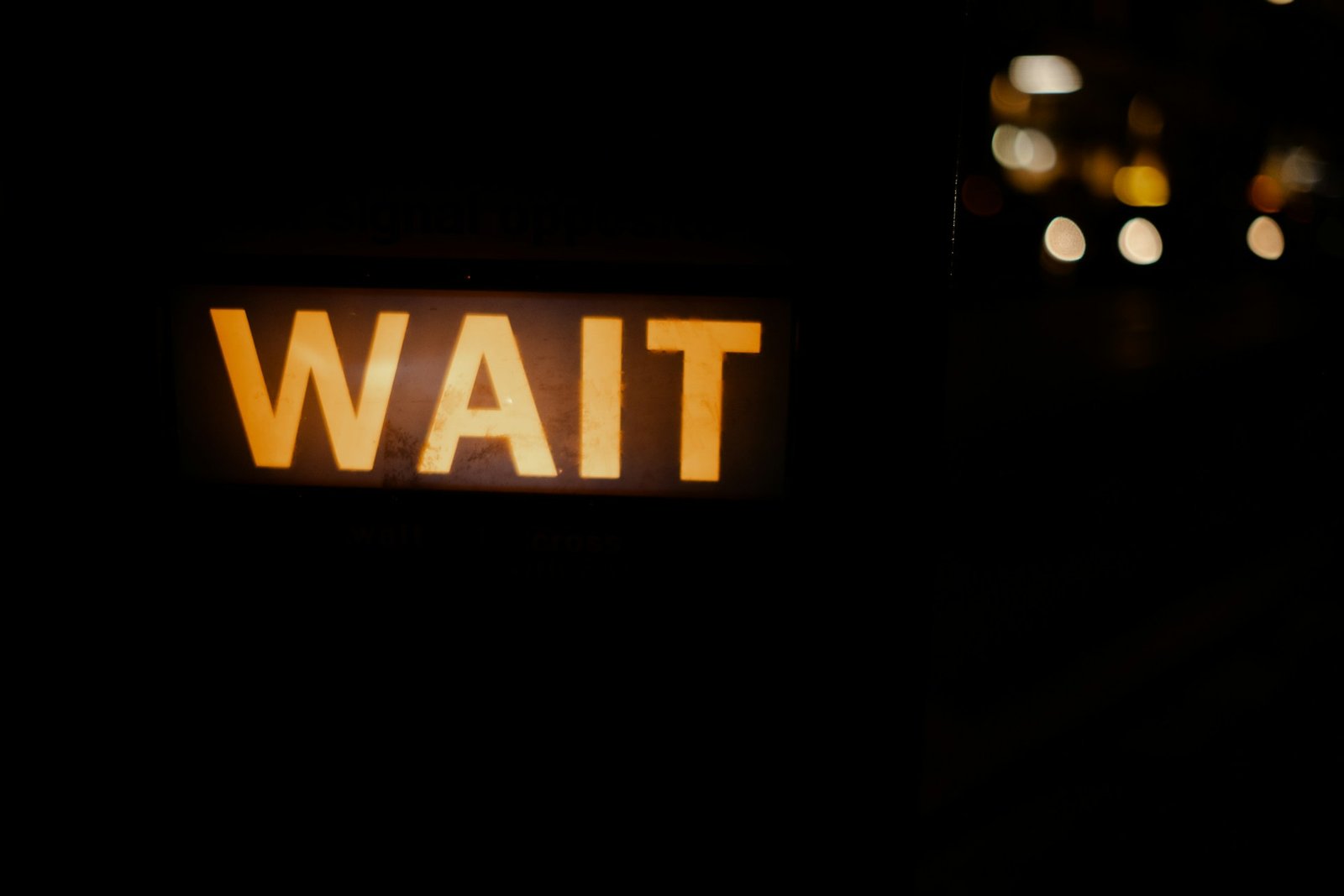
Confession: I rarely watch YouTube videos or listen to Podcasts on normal speed. I have to at least 1.5x it most of the time.
Patience, it turns out, is not a single muscle. It is many. And I have spent most of my life training the wrong ones.
I’ve written about patience before. I leaned, as everyone does, on the Stanford Marshmallow Test. The one where children, left alone in a room, were given a marshmallow and told they could eat it now, or wait fifteen minutes for two. The kids who waited, the original 1970s study found, grew up to score higher on the SAT, hold steadier jobs, and presumably never reheated leftovers without permission. The study proved clearly: patience pays.
Then, in 2018, researchers at NYU and UC Irvine replicated the study with a much larger and more diverse group of children. Their findings, published in Psychological Science, were a little less inspirational. The kids who waited weren’t more disciplined. They tended to come from homes where adults followed through on promises. Where a treat said to be coming actually arrived. Where the world had quietly taught them, over thousands of small experiments, that waiting tends to pay off.
In other words, patience wasn’t a private virtue that those children had cultivated through grit. It was a verdict the world had handed down to them.
***
Because the waiting most of us are asked to do in our forties and fifties is not the kind that ends with a second marshmallow. We’re waiting on events we have no control over. Our adult children, away from home, may or may not call like they said they would. The customer service bots who invariably transfer us, with great cheer, to a colleague who turns out to also be a bot. The repair person, somewhere within a four-hour window, who, by some immutable law of customer service, arrives in the fourth hour. The friend who has not replied to the message we sent in February. The body itself, announcing new insights in a language we are still learning to read.
The hardest part is what we do with the waiting itself.
The Dutch have a word for the practice of doing absolutely nothing on purpose. Niksen. Not meditation, not journaling, not the long elaborate self-care routines that have come to feel like a second job. Just nothing. Staring out the window nothing. Watching the dust nothing. Dutch psychologist Carolien Hamming has described it as “doing something without a purpose, like staring out of the window.”
When the word Niksen first floated through The New York Times a few years ago, I dismissed it as another wellness import. Like hygge. Which we took, repackaged with branded candles, and turned into something to buy.
But I think I had niksen wrong. It isn’t a hack. It is, very carefully, the rejection of one. It says there is a category of being human that has nothing to do with becoming a better version of yourself. You can simply be in your kitchen, looking at a tree, on a Tuesday at three.
This is supposed to be the easiest thing in the world. It is, for me, the hardest.
I am trying, badly, to practice it. Not for any grand purpose. Not because it will lower my cortisol or grow my hippocampus or do whatever else the next research paper claims silence does. (Although, probably it does.) I am trying because the alternative is to keep meeting every life moment with the patience of a four-year-old who has not been told whether the marshmallow is coming.
When we’re in the car driving, my husband insists on listening to a podcast at normal speed. I brace myself and draw deep breaths. I somehow survive the 45-min ride back home. Sure, my mind wandered, and bonus—I managed to look at trees on the way. I niksened, albeit accidentally.
The test, I’m starting to think, is not whether I can wait. It is whether I can wait without turning the waiting into a problem. I am not winning. I am paying closer attention. That feels, just barely, like the same thing.
My daughter is yet to call.