
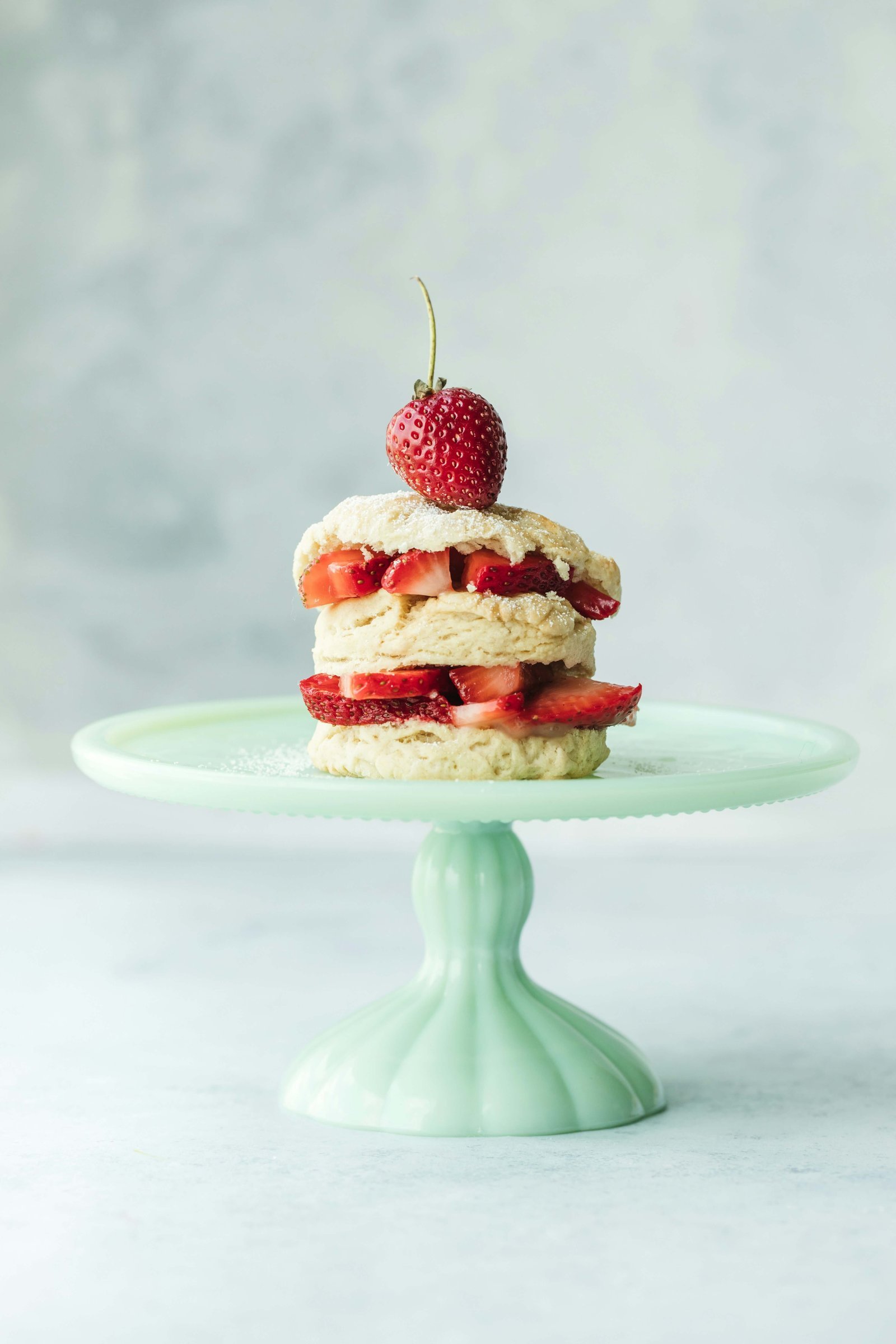
In 1929, at a Women’s Exposition, the Brooklyn Borough Gas Company unveiled a new kitchen. Lillian Gilbreth had designed it. Everything sat in a tidy L, with counters at heights that didn’t wreck anyone’s back.
To prove it worked, testers made a strawberry shortcake in an ordinary kitchen and then in hers. The number of kitchen operations dropped from 97 to 64. The number of steps dropped from 281 to 45.
Gilbreth was, by then, a widow running an engineering consultancy on her own after her husband Frank’s sudden death in 1924. She was raising eleven children. By any definition, she had it all.
She was also, as Purdue (where she became the first woman on the engineering faculty) puts it, a woman who invented the modern kitchen and did not cook. The family had a cook and some nannies. Shortcake was one of the few things she made well.
Her having it all came with a list of things she had decided to miss.
Now, that’s the fine print we tend to skip when we try to copy wildly successful people. Every version of having it all comes with an unwritten list of what we’ll have to give up.
A century ago, in June 1922, a New York Times editorial named the twelve greatest living women in the United States. None had children. Six had never married. The editors concluded: “Let those who think it’s easy to manage a first-rate career and a first-rate home simultaneously find an explanation for that.”
When I wrote about having it all, I confessed that my own version lasts for about one day each leap year. The rest of the time, I walk through life in a lopsided state, a tug-of-war between competing and equally essential priorities.
Some of what keeps the list long is invisible. Sociologist Allison Daminger interviewed 35 couples and broke household thinking into four parts: anticipating needs, identifying options, deciding and monitoring progress. While decisions were split roughly evenly between partners, women mostly handled anticipating and monitoring.
Women have become the unseen project managers at home, but unlike paid project managers, they also do most of the project tasks. Nobody counts the hours that go into camp consent forms, doctor’s appointments, or noticing when the milk inventory has gone critical.
I blame much of the have-it-all epidemic on our social media feeds, which almost guarantee we go to bed with a severe case of FOMO. During the pandemic, I wrote about how telework freed up a good three hours a day. Instead of rejoicing, I was in deep anguish, convinced I’d blow this small window of opportunity. I’d recently read that Isaac Newton worked out the basics of gravity while Cambridge was closed for the plague. Not that I compared myself in any way to the brilliant scientist, but I’d found one more reason to feel guilty about underachieving.
Andrew Przybylski and his colleagues define FOMO as “a pervasive apprehension that others might be having rewarding experiences from which one is absent.” In a national sample of 2,079 people, those higher in FOMO reported lower mood and lower life satisfaction. In a smaller group of students, they were more likely to check Facebook during lectures and to text while driving.
In short, FOMO takes us out of the present and into an anxious alternate universe where we fret about missing life’s most fun opportunities. Unchecked FOMO is one of the primary reasons our to-do lists are riddled with low-value tasks. I once spent over an hour on the phone trying to reverse a $7 charge. Fifteen minutes in, my ego got involved, and I began to rationalize my time-wasting as “sticking to my principles.”
Sadly, overcoming the tendency to have it all requires us to distinguish signal from noise, an undertaking that’s usually much harder than it sounds. Eisenhower had a line for this, which he credited to a former college president: “I have two kinds of problems, the urgent and the important. The urgent are not important, and the important are never urgent.”
Meng Zhu, Yang Yang and Christopher Hsee tested it. Students chose between two identical writing tasks, one of which paid more. When the lower-paying task expired in ten minutes and the better one in 24 hours, 31 percent picked the worse deal, compared with 13 percent when both deadlines were a day away. In a later study, people who saw themselves as busy fell for it more.
That describes a lot of my days. I chase whatever is about to expire, keep track of what nobody sees, and still suspect someone somewhere is having a better time. Always feeling off-balance seems to be my balance. It sounds fun and adventurous, but as I get older, I realize it’s unsustainable.
Gilbreth, for her part, seemed to know her priorities. In 1930, she told a group of businesswomen, “We considered our time too valuable to be devoted to actual labor in the home. We were executives.” A controversial line like that would be enough to start a war today.
I’m now intentionally trying to focus less on having it all and more on knowing what all includes. If I average my life out over time, I guess I’ll get close to having it all.
I have yet to hear a man ask for advice on how to combine marriage and a career. Gloria Steinem.