
August 4, 1936. The Olympiastadion in Berlin, long jump qualifying round. Jesse Owens, already the fastest man in the world, had fouled his first two attempts. One more foul and he would be out — no medal, or no final — in front of 100,000 spectators and one particularly invested Führer.
The story goes that Germany’s best long jumper, a blue-eyed, blond athlete named Luz Long—the very specimen the Reich had hoped to showcase that summer—walked over to his rival and offered a suggestion. “Lay a towel a foot before the takeoff board and jump from there. You’ll qualify with room to spare.” Owens did, qualified easily, and beat Long for the gold that afternoon with an Olympic record that stood for twenty-four years.
Sportswriters have since poked holes in the towel story. Grantland Rice watched Owens through the entire qualifying round and never saw the two men speak. Owens himself, asked about it decades later, reportedly conceded it was just a good story.
What happened after the final, though, required no embellishment. Long, having just lost in his own event, in his home stadium, with the Nazi leadership watching from the box seats, was the first to reach Owens. He congratulated him, posed with him for photographs, and walked with him arm-in-arm to the dressing room. Befriending a Black American in that stadium, in that year, was a bold move.
“It took a lot of courage for him to befriend me in front of Hitler,” Owens later wrote. “You can melt down all the medals and cups I have, and they wouldn’t be a plating on the 24-karat friendship I felt for Luz Long at that moment.”
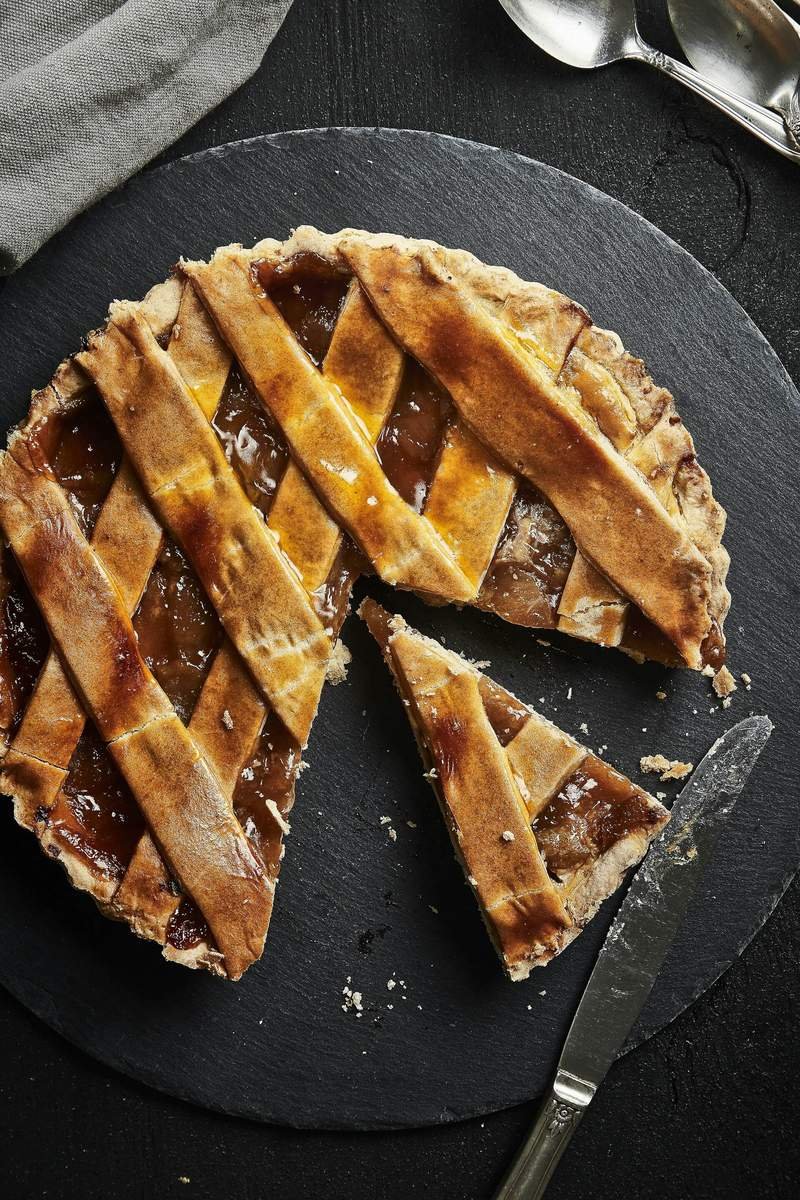
I’ve written about zero-sum thinking before—the cognitive bias that treats life like a pie with a fixed number of slices, where every slice on someone else’s plate is a slice missing from ours. In that post, I told the story of Leonardo da Vinci and Michelangelo, commissioned in 1504 to paint opposite walls of the same Florentine city hall. Two of the greatest artists who ever lived, in one room, and they could barely stand the sight of each other. Historians tell us the rivalry curdled their work. Neither painting was ever finished.
Da Vinci and Michelangelo looked across one room and saw a threat. Long looked at the man about to take his gold medal and saw, apparently, a friend he hadn’t met yet.
The research since my original post has only made this more interesting. In 2024, a six-country study of more than 10,000 people found that the zero-sum mindset is a stable, measurable trait—and that people who score high on it interpret others’ behavior as more hostile and cooperate less, even when cooperation would benefit everyone, including themselves. The fixed pie, in other words, shrinks the longer we believe in it.
Then, late last year, researchers at the University of Chicago published something surprising: older people hold fewer zero-sum beliefs than younger people. Across four studies and 2,473 participants, the older the participant, the less they believed that one person’s gain required another’s loss, partly because, with age, we stop perceiving resources as quite so scarce. Younger generations today, meanwhile, are testing as more zero-sum than the ones before them. The press release was titled, perhaps inevitably, “Listen to grandma: life’s not a zero-sum game.”
I find this oddly comforting. Most cognitive biases dig in as we age. This one apparently loosens its grip. After five decades of watching the supposed pie behave—colleagues’ promotions that somehow failed to end my career, others’ books that did not use up the world’s supply of readers, the thousands of runners who have finished marathons ahead of me without ever taking the finish line with them—I’m beginning to realize the logical fallacy that zero-sum thinking is. The pie math has reworked itself.
Not all the way, though. I still feel the pinch, thanks to decades-long conditioning, when someone my age fat FIREs their way to an early retirement. The pinch arrives first, uninvited. The pie math arrives a few seconds later, like a chaperone. I’m told this counts as progress.
Luz Long never lived long enough to confirm the Chicago findings. He was killed in July 1943, during the Allied invasion of Sicily. He was thirty. He and Owens had kept writing to each other until the war made it impossible, and in what Owens described as Long’s final letter, written from North Africa, Long asked him for one thing: someday, after the war, find my son. “Tell him about how things can be between men on this earth.”
Owens found Kai Long in Hamburg in 1951, and the two families remain connected.
Ninety years ago this summer, in the most hostile stadium imaginable, two men competed as hard as anyone has ever competed for a single medal—and both walked away richer. The pie was not fixed, even there. It rarely is.
There’s a lot to go around.